Thursday, February 9, 2017

When Time Stopped by Zoe Merold

He lied there in the bed, listening to the muffled chaos that seeped through the room’s door from the hospital’s hallways. His head was turned towards the window, which revealed another warm, spring afternoon, with the sun shining into the barren and cold room. It was all just white noise and blurred images though, because he wasn’t really tuned in to anything at the time. The energy to do that had left him long ago, when the treatment had become too much for his aging body, and his mind had begun to fade away. The man didn’t have much strength at all nowadays, nor did he have anything that was worthy of effort in the first place. Earlier in the process, he used to get short bursts of ebullience, instilling in him hope, hope that was only shared by the nurses and doctors that took care of him. He had no one else. But, now he knew; there was no hope for him. He would pass away very soon, quietly and peacefully, in the hospital. There would be no family to hold his hands, to sit by his bed, no one to really say one last goodbye to. Everyone had gone before his body was ready to let him go. Knowing that it wouldn’t bring him any pain was a small comfort of course, but an empty one at that.
A click was heard from the door, causing the man to gently turn his head in its direction. A nurse had walked in. She was young, and looked a bit overworked in her disheveled scrubs and her fraying bun, but she smiled warmly at the man nonetheless.
“Sir, would you like to go outside?” she inquired. “It’s a nice day, so we could go enjoy the park for a bit, and I could really use a break.”
The man faintly smiled back at her. “That sounds like a lovely idea,” he responded, his voice weak but welcoming. The nurse brightened at this. Apparently, she was hoping that would be his answer.
She rolled over the wheelchair that was always handy and sitting against the wall, positioning it so that she could lift the man from the side of the bed, and place him carefully in the seat. The man began to gingerly lift himself from the bed, and the nurse helped him carry his own weight, even when not much of him was left to carry. A dull pain bloomed in the man’s back, but he ignored the familiar sensation. It had been far too long since he had had a good reason to leave that hospital bed, and he wanted to enjoy it as much as he could. Knowing that this could easily be his last chance to go outside before leaving, the man felt that he needed to make the most of this small adventure.
The cordial nurse calmly pushed the wheelchair into the hall, mindful of those who were rushing by to attend to other patients. With a mild amazement, the man watched it all fly by him, the commotion of the world continuing on as his world slowed down, nearing the time when everything would cease to turn for him. He wasn’t the only person though. Many other patients were approaching their end as well. Some knew it, while others had no idea what fate had arranged for them. As these thoughts swam around in the man’s conscience, the pair arrived at the hospital doors, leaving the threshold of sickness, and entering the warmth of direct sunlight. It washed over the man, thawing his frail bones, clearing his bleak thoughts from his head. Closing his eyes, so that he could focus everything on that remarkable feeling of the sun shining on his pale skin, the man felt a pull at the corners of his mouth, and gave into it, allowing a great grin to blossom across his creased face. He cherished every second of it, until they entered the shade beneath a canopy of leaves. Through his eyelids, he saw the light change from the glowing pigment of a warm embrace, to the cool and pleasant tint of nature’s awning. He then opened his eyes, and lifted his chin higher, revealing the beauty of the verdant trees above, with radiant, golden stars shimmering amidst the interlaced leaflets. Once again, the man closed his eyes, each of his weary muscles relaxing as he immersed himself in the serenity around him, except for those in his face. Even if he wanted to, the man could not let his grin leave his visage.
Continuing into the park, the nurse strolled down a path, while carefully pushing the man along. She too had a smile on her face, grateful for a moment away from the stress that clung to every member of the hospital staff. Knowing that they both could use some time outside, she had thought it was a great idea to offer to take this patient to the park across from the building. It was an amazing day, and it would have been such a shame for it to be squandered by staying indoors. Luckily, it wasn’t wasted.
As the two wandered on together, the sound of laughter, a soft jingle of beautiful bells, entwined with the melody of the hidden robins, gradually reached their ears. The man could not think of a more delightful way to spend an afternoon, except for one small thing. He would prefer to be walking on his own, controlling where he went, rather than be sitting in a wheelchair. To stand on his own legs again was a recurring dream of his. The feeling of freedom was indescribable to him, and he wished again and again that he had treasured such things when he still could.
“What is your name young lady?” the man asked, for he had neglected to find out all this time.
“Naudia, sir,” the nurse answered, giggling inside at how he had called her a young lady.
“Well, Miss. Naudia, would you mind terribly if we stopped for a short time?”
“Not at all, is something wrong?” The nurse put down the brakes to keep the wheelchair from moving, and walked around to the front so that she was now in front of the man, crouching down so that they were at eye level.


The man did not respond to her question. He was much too focused on the undertaking ahead of him. As firmly as he could, he grasped the arm rests of the wheelchair in his hands, and then moved his legs, one at a time, into a position that allowed his feet to be planted flat on the ground. He was determined to do this no matter what, and those who had loved him knew very well how stubborn he could be. Ever so slowly, he began to push his weight up and forward with thin, wiry arms, extending his lanky legs as he did so. He had begun to shake, but he forced himself to carry on. Struggling through his great feat of strength, he kept at it until he felt that his arms no longer had anything more to lift up, and that his hands had released the chair behind him. In disbelief, the man dropped his chin to look down, to see that his legs were in fact beneath him. The ground was pressed against the soles of his feet, and he could feel how his legs were now carrying his weight. He was standing. He had done it. After all this time, time spent in a bed, in a small, barren room, he had managed to stand on his own feet. A tear unwillingly spilled from his eyes, as he lifted his head, and beheld the world before him from a new angle, a new perspective. Everything was now in focus. He could now discern the chittering birds themselves, perched in the trees, from the leaping squirrels, gliding from branch to branch. Far in front of him, he could see children playing in the park, the source of the sweet laughter. He could descry the pink flowers of a girl’s dress, and the dinosaur on the shirt of the boy she was sitting with in the mulch. He could see that the women watching over them, smiling lovingly, was wearing sunglasses, and had her long, black hair loosely braided over her shoulder. And, beyond them, he could see cars race past on the street, behind the great trunks of the oaks before him. For so long, his world had been composed of so little, most of it lost in a blur, in the blackness that had taken over much of his sight, while what he could see was dull, washed-out. But suddenly, the man was able to see the vibrant world, that had been hidden from him all this time, the time he had been in that hospital, from atop his own legs. More tears streamed down his face, one that had lost some of its creases and folds, and had gained the lively coloration of a younger man. Not believing what was happening, he carefully lifted one leg from the ground, and took a step. To him, that was the equivalent to being the first man to set foot on the moon. Another step was taken, until he was fully walking, without any assistance, without any stumbling or wavering.
In the furthest depths of his conscience, he thought he had heard a small voice call out to him. He did not register it though, for he was too overjoyed to care. He had a whole world before him to re-explore, and he wasn’t going to waste a single second.


Naudia was gripping the man’s shoulders.
“Sir! What’s happened? Sir, please answer me!” she shouted, desperation creeping into her voice. The man’s body was now slumped forward, limp, and unresponsive to any of her pleas. He could no longer respond to her, no matter how hard Naudia tried to elicit any sign that the man was still there. The man was gone, and he wouldn’t be coming back. Her world had kept turning, the clock had kept spinning, but his had stopped for good.

Is Frankentein Really a Monster?: By Nick Matkiwsky

When one hears the word "monster" they immediately associate the word with something scary and abnormal. A giant figure, claws, and a hideous face are all characteristics of a typical monster. In Mary Shelley's, Frankenstein, Victor Frankenstein's creation matches the description of a "monster" accurately and from the moment Victor lays eyes on him, he is perceived as a horrible wretch. The poor thing was unable to prove itself to be harmless and was automatically presumed evil by its hideous appearance. In fact, Victor was so disgusted that all his handwork went to waste that he abandoned the creature and left him alone to suffer. The creature didn't make an attempt to hurt Victor, all he did was come to life but what Victor saw was what ultimately what made him leave.


Image result for FrankensteinThroughout the story the monster tried to make human contact, but was instantly rejected and even attacked. His own creator left him to rot and nobody was willing to give him a chance. That was until the creature came upon a shack where he lived next to a family. During this time he would steal their food to survive and eavesdrop on them constantly for he was very lonely. When the family began to suffer, the creature realized it was because he was taking their food and decided he would begin to help the family by doing little things here and there. Then one day, the creature wanted to meet the family, but decided it would be best if he was unseen. In an attempt to talk to someone he began to communicate with a blind member of the household. The two actually talked for sometime and during this period it showed that under all of his ugliness, the monster was really a good person. Unfortunately the monster was seen by the others and chased away, again not given the chance because of the way he looked. Another reason the creature is so dehumanized is because he is never given a name. A name gives something an identity and without a name the monster is just referred to as the "creature" and "wretch" which will eventually drive the creature into committing the many murders he does in an attempt to seek revenge on his neglecting creator.
 The monster was never given a shot to show he is innocent and good, however he does begin to play the part associated with him. In an attempt to get revenge on Victor, the creature begins to murder his family members. In a sense he becomes the monster everybody see's him as and in reality you cant really blame him. He tried very hard to be seen as a normal, decent person but because of his massive build and ugly features he was instantly pushed away and rejected by society. This is analogous to the  saying, "dont judge a book by its cover", where the creature is the book and the people judge him and find him revolting without ever even trying to get to know him.

Tuesday, February 7, 2017

Walton and Victor Frankenstein are Practically the Same-- by Pat McGurrin

Walton is introduced early in Frankenstein, but he is never established as an important character. However, it seems that Victor's story foreshadows Walton's fate.

The first letters by Walton quickly establish his strong curiosity towards Victor and his journey. Victor then goes on to explain everything that happened, starting with his interest in science. Victor reveals that as an adolescent, he was interested in science, and grew more obsessed as he became older. As he told the story, he kept warning about his [Vicor's] upcoming fate, as if he wanted to also warn Walton.

Further into the novel, Frankenstein explains his isolation from his family, due to his addiction for knowledge and success. Victor's situation is extremely similar to Walton's, as Walton left his sister in the pursuit of knowledge. Seeing this, Victor repeatedly highlighted his downfall, because he realized that it was his obsession that caused it.

On Walton's ship, Victor had no family or friends, so he must have swallowed his mistakes, and began to care more for the people around him. After all, Walton did save him, and his gift of survival was very valuable.

Walton seems to be forgetten later in the novel, but Victor's emotions clearly convey his [now] wise feelings towards isolation and obsession- which the reader must assume Walton will one day learn.


Friday, February 3, 2017

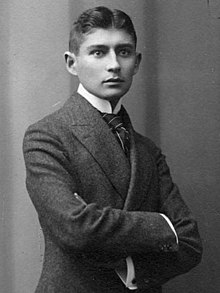
What is "Kafkaesque"? by Jessica Longstreth

The class recently read the book The Metamorphosis by Franz Kafka, and to say the least, it was a very strange book. It had a rather abrupt ending and after I closed the novella I found myself thinking, Wow, that was just a really sad and depressing story. Most of all, I wondered, what was going on in Kafka's mind when he wrote The Metamorphosis? There seems to be no explanation as to why the main character, Gregor Samsa, wakes up as a beetle in the first place, and the longer he remains in his insect form, the less his family views him as a person, a son, and a brother. As time went on, Gregor just seemed to become a burden for the family, and when the starved beetle-Gregor dies, they just seem relieved. Not mournful of the loss of a loved one, but only relieved.

These dim and depressing aspects of The Metamorphosis is exactly what fits the definition of the term "Kafkaesque". To be exact, the definition of Kafkaesque would be anything "characteristic or reminiscent of the oppressive or nightmarish qualities of Franz Kafka's fictional world". Today, Franz Kafka's works have become so influential, that this term as been coined after him. Such nightmarish and oppressive qualities are a common occurrence in Kafka's writing. From Gregor of The Metamorphosis, to the outcome of Joseph K. in Kafka's The Trial, Kafka's world of literature is best identified by such bleak thoughts.

But what one really has to ask about Kafka is what inspired him to pour so much doom and gloom into his writing? Sure, his works didn't have to be all sunshine and rainbows -- but does Kafka's work really reflect his opinion of life and human nature? For now, I can only infer what Kafka's view of the world was, and from what I can tell, it was not a pretty one.


Image result for franz kafka
Image result for the trial kafkaImage result for the metamorphosis

Thursday, February 2, 2017

The Mortal Instruments: Dream Cast | By: Kristine Le

Inspired by my current read, The Mortal Instruments: City of Bones by Cassandra Clare, I thought it would be a fun idea to create my dream cast for a book-movie/tv show adaptation. The book has already been created into two separate adaptations and for the most part I think the casting directors did a phenomenal job but, there are some characters that I believe they couldn’t have been more wrong about. I’ll be completely honest now and say that most of the “cast members” I’ve selected don’t necessarily match the book’s description but I’ve chose most them based off of who I thought could portray the character’s personality best.

CAST
Jace Wayland: Jamie Campbell Bower
Absolutely the perfect pick for Jace. Jamie captures Jace’s sarcastic, standoff (yet, caring) personality exactly as I imagined it in the books.  
Clary Fray: Lily Collins
I picked Lily Collins for Clary mostly because I love the chemistry between her and Jamie and feel that they would really be able to recreate Clary and Jace’s relationship accurately. I also picked Lily because she has the look and feel of an artist which goes hand in hand with Clary’s character.
Alec Lightwood: Matthew Daddario
Daddario’s not perfect but he does capture how I imagined Alec to look in the books.
Isabelle Lightwood: Mila Kunis
I saw Mila and it was like BAM! That’s Isabelle Lightwood. It wasn’t about the way Mila looks but she just gave me such an “Isabelle Lightwood” feeling that I had to pick her.
Simon Lewis: Alberto Rosende
Alberto is casted in the tv show for the Mortal Instruments and I couldn’t be more happy. He does such a good job at bringing to life Simon’s character and I just really appreciate the effort he puts into his work.
Magnus Bane: Harry Shum Jr
Just like with Daddario I don’t think Harry is the perfect fit for Magnus but he definitely fits the image I had forming in my head when I was reading.
Maia Roberts: Kat Graham
Kat fits both the description and personality of Maia. I feel like Kat would really be able to bring Maia to life fully with her amazing acting.
Luke Graymark: Aidan Turner
Turner has both the skill and face to be Luke Graymark. When I first watched the Mortal Instruments movie and saw that Turner was casted as Luke I was overjoyed. He did such a good job that I actually felt that I was watching Luke Graymark on screen.
Max Lightwood: Lewis MacDougall
I’ve heard great things about MacDougall’s acting and saw that he was a young actor and instantly thought of Max Lightwood. At first when I picked MacDougall I wasn’t checking to see if he matched Max’s description but, thinking about it, he actually does somewhat fill the description. BONUS!
Jocelyn Fairchild: Lena Headey
Just like with Turner, I though Headey did a wonderful job at playing Jocelyn in the movie that it was a no brainer that I would include her as a part of my dream cast.
Maryse Lightwood: Angelina Jolie
Angelina Jolie may be a bit of a stretch for Maryse but it’s Angelina Jolie… how could I not include her?
Hodge Starkweather: Robert Carlyle (younger)
Seeing Carlyle play the role of Rumplestiltskin on Once Upon A Time, I think he would make a perfect Hodge. Everything about him, the way he walks, talks, and presents himself gives me a Hodge vibe. The only thing I would wish to change is his age and make him younger.
Valentine Morgenstern: Ian Somerhalder
I’m still on the fence with casting Ian for the role of Valentine but I just feel that he would do justice to the role. I’ll have to overlook the fact that I’m making one of my favorite actors into a villain.
Sebastian Verlac: Alex Pettyfer or Colton Hayes or Jake Abel
So many choices for Sebastian, partly because his character is so complex it was hard to pick one person to capture it all. Right now I’m leaning toward Alex Pettyfer because I think his experience from Beastly would really help him become Sebastian.
Jordan Kyle: Colton Haynes
Jordan was really hard to decide. I ended up picking Haynes because I thought he could act as Jordan really well but I know there are better options out there to play Jordan.
Raphael:  David Castro
Castro is another member of the Mortal Instruments tv show cast and honestly I think he’s doing a great job at being Raphael and his performance is very satisfying, I wouldn’t say he’s the best Raphael, but he’s definitely an option everyone should consider when they make their own dream cast list.

Side Note:
If this adaption were to ever happen I’d love for MTV to pick it up because they really know how to transform fantasy from books to an on screen production without making it seem cheesy or cliche. For example, The Shannara Chronicles was made into a tv show by MTV and it was absolutely amazing and so well done. As for the soundtrack for the production, anything by M83 would go together with Cassandra Clare’s world so beautifully.

In all, this list was actually extremely difficult to make but also an interesting challenge. Seeing how others formed their own dream casts and how theirs differed so drastically from mine was pretty fascinating considering we were all thinking about the same characters but had such different interpretations.

Wednesday, February 1, 2017

My Experience at the Women's March on Trenton by Sylvia Kloian


Exactly 10 days ago, on January 21st, 2017, I attended the Women's March on Trenton, held in our state's capitol. Now let me get a few things straight: the March was not a protest, it was not violent, and it was in no way destructive. In fact, no arrests were made at any of the marches. On the Women's March website, you can find their mission statement, which basically says that we march to fight discrimination against someone due to their gender, race, sexual orientation, citizenship, or physical ability. It also references climate change and a women's right to control her own body. These all happened to be issues that I find extremely important, and all issues that Donald Trump is challenging. So that is why, on the first day of his presidency, over 6,000 men, women, and children took to the streets in Trenton in solidarity against racism, sexism, homophobia, xenophobia, and more. In Washington D.C. there were about 450,000-500,000 people in attendance, and even more in L.A. (750,000!). Before and after the Trenton March, there were over 20 wonderful speakers. Some of the most memorable were Congresswoman Bonnie Watson Coleman, the march's organizer Elizabeth Meyer, and Ruth Savage-Jennings (who has been an activist since she was 14 and was a friend of Martin Luther King Jr.). There were so many others, including LGBT, Muslim, Jewish, and Christian persons. There were also several high school students who spoke. This had to be the most inspiring part of the entire experience. There were 2,900 seats inside, but the rest of us were stuck listening in on the speeches from speakers outside on the stairs of the War Memorial. Everyone was huddled together, holding a multitude of signs, and cheering along together at each speech. I cried listening to all these strong women talk about their accomplishments and about overcoming prejudice and sexism. Finally, I, too, was part of discussions that are rarely had in school or even at home. It's so exhausting to have to sit around while all around you people are trying to tell you what you can and can't wear, what you can and can't talk about, and what you can and can't do with your body. Especially in this election, I've had to pick and choose my battles, and held my tongue sometimes when I've heard someone say something that I think is wrong. And, frankly, I'm tired of holding my tongue. The truth is, most others don't have to. I've noticed that when a man talks about politics, people just say they're sharing they're opinions, but when a woman talks about politics, people say that they're "triggered" (a word that is now often used by many my age to dismiss people expressing actual concern) or being a "bitch". And you may have a different opinion than this, but this is something that I have personally witnessed and experienced. So, because of this, marching was such a healthy way to surround myself with people who respect me and my opinions, and to finally cease "staying quiet". The power of knowing that I was marching with dozens of other sister marches in the U.S. and on every other continent (including Antarctica) was amazing and life changing. I am so, so, so, grateful that I got to be a part of this; one person in a sea of millions who made history by marching for what they believe in.

The Voice- Poem by Melissa La Fountain

How frustrating it is
To have so much to say
But to be rendered silent
By a voice in your head

This voice and I
We are not friends
It tells me to be quiet
It forces me to believe I'm something I'm not

"You're shy. You're awkward. You always have been and always will be," it says.
Silence, that is what it wants.
But I don't want silence.
Not anymore.

I want to rip this voice from my head.
I want to tell it that it is the one who should be silent.
I am not shy. I am not awkward.
I will not be quiet anymore.